Why math homework ends in tears, and how to change the evening
By Every Mind Learning Press Drs Laurie Wellner and Kathleen Pierce-Friedman
Many families know the pattern well. Dinner ends, the math worksheet comes out, and within ten minutes someone is crying, sometimes the child and sometimes the parent. The child who seemed fine all afternoon suddenly cannot remember anything, insists the teacher never taught this, or puts their head down on the table. It is easy to read this as stalling or defiance. For a child with dyscalculia, it is usually something else: a tired brain meeting a task that already felt uncertain at school, now with no teacher, no classmates to copy, and a parent watching.
By evening, children have spent the whole day holding it together. Math that was barely manageable at 10 a.m. with a teacher's example on the board can feel impossible at 7 p.m. from memory alone. Working memory, which children with dyscalculia already lean on heavily, is at its lowest. Add the feeling of being watched by someone they want to please, and the emotional load can tip over before a single problem is solved. The tears are not about the worksheet. They are about feeling lost and exposed at the same time.
The first change is timing and setup. If you can, move math earlier, even a short snack break after school before anything else. Keep the space calm and predictable: the same seat, the same tools, a number line and a multiplication chart within reach. Cover all but one or two problems with a sheet of paper so the page does not look endless. A smaller visible task lowers the panic that makes recall disappear.
The second change is your role. Instead of checking answers, become a thinking partner. Ask, what is this problem asking you to find? Have your child show you with objects, drawings, or money before writing anything down. If they are stuck, do a similar problem out loud yourself, talking through each step, then hand them back their own. Avoid reteaching a method different from the one used at school, which can create more confusion. When in doubt, a short note to the teacher is better than a long battle at the table.
The third change is knowing when to stop. Agree on a time limit, often fifteen to twenty minutes, and honor it. Stopping at a calm moment with three problems finished teaches more than forcing through all twenty in tears. Write a brief note on the page about where your child got stuck. Teachers can use that information, and many will adjust the amount of homework once they understand what is happening at home.
Homework is supposed to practice what a child already understands, not prove they can survive frustration. When evenings consistently end in tears, that is a signal that the foundation needs attention, not that your child needs to try harder. Short, structured, visual practice that starts where your child actually is can turn math time from a nightly battle into something steady. The goal is a child who sits down willing to try, and a parent who can sit beside them without dread.
A next step for your learner
Educators and parents
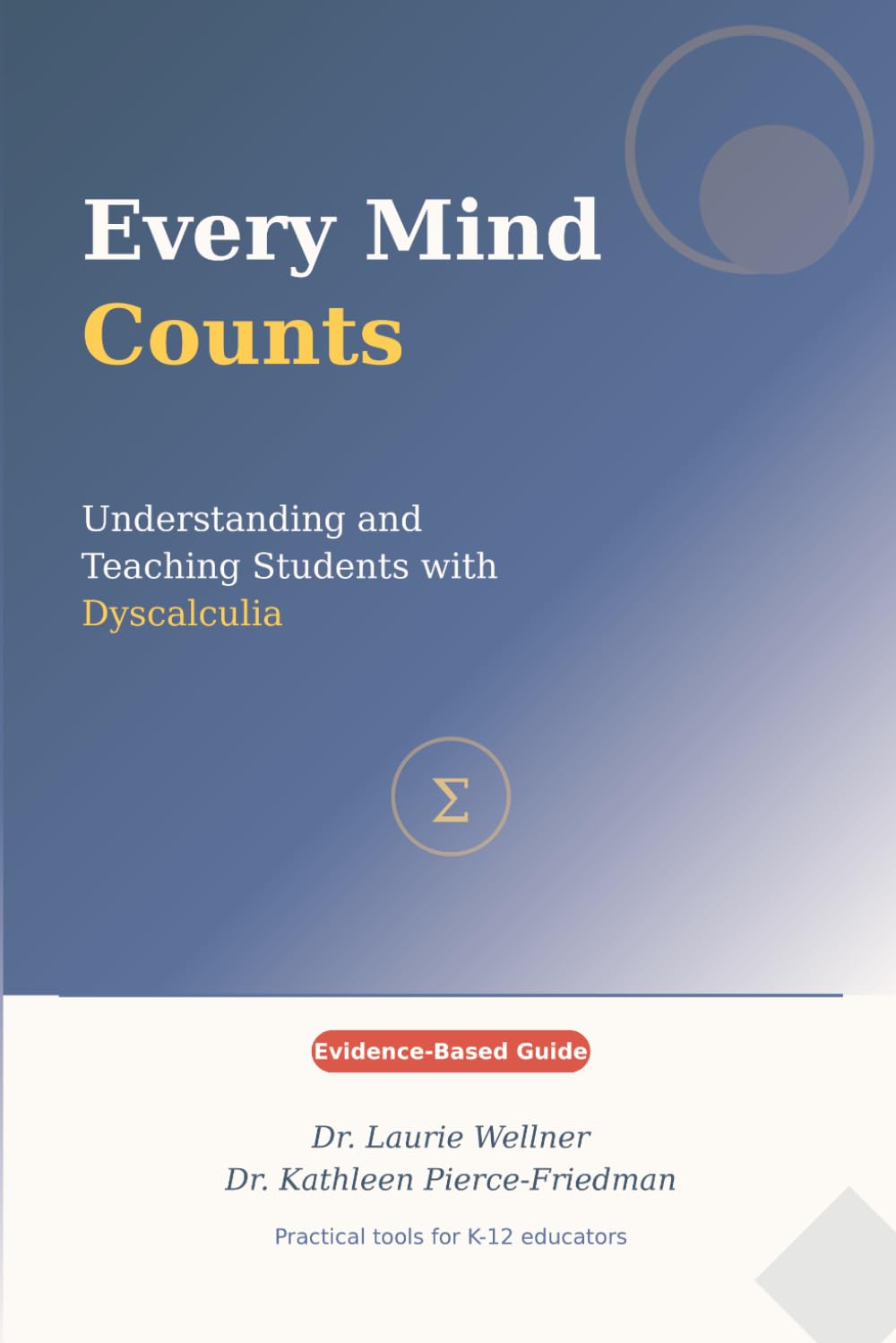
Every Mind Counts: Understanding and Teaching Students with Dyscalculia
The practical guide behind the workbooks: what dyscalculia is, how to spot it, and how to teach it.
Signs of dyscalculia by grade
Keep reading
October 29, 2026
Helping a middle schooler who has given up on math
By middle school, many students with dyscalculia have stopped trying, not because they cannot learn, but because trying has stopped feeling safe. Here is how to rebuild that.
October 22, 2026
Why your child does math at home but not at school
A child who measures ingredients without a hitch and then freezes at a worksheet is not faking either performance. Here is what changes between the two, and what to do about it.
Looking for the workbooks? Browse every title in the press. Writing about an overlooked learning difference? Publish with us.